Professor
Department of Agronomy
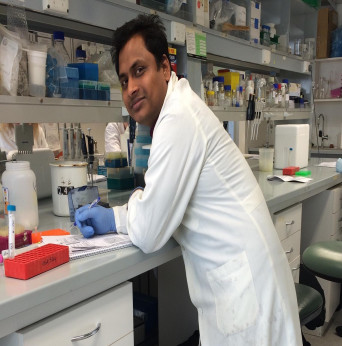
Dr. Md. Hasanuzzaman is an Associate Professor in the Department of Agronomy at Sher-e-Bangla Agricultural University (SAU), Dhaka, Bangladesh. He started his professional career as an Assistant Director in the Bangladesh Agricultural Development Corporation. Then He joined as a Lecturer in the Department of Agronomy, SAU in December 2011. His field of expertise is in Agronomy, Crop Science and Plant Stress Physiology. Dr. Hasanuzzaman completed his Doctor of Philosophy in Agricultural Science and Graduate Certificate in Research with a thesis on “Physiological and Morphological Responses to Osmotic Stress in Barley (Hordeum vulgare L.)” from University of Tasmania, Tasmania, Australia in December 2018. His Ph.D. research mainly focused on the contributions of stomatal and cuticular (residual) transpiration toward osmotic stress tolerance that contributes to the overall performance of barley under osmotic stress conditions.
Dr. Hasanuzzaman completed his Bachelor of Science in Agriculture (Hons.) with secured CGPA 3.85 out of 4.00 in the academic year of 2005-2009. He also completed his Master of Science in Agronomy from the Department of Agronomy at SAU and secured first merit position with CGPA 4.00 out of 4.00 in the academic year of 2010-2012. He was awarded the Dean's award from the SAU for the academic excellence in the academic year of 2005-2009. He received the Tasmanian Graduate Research Scholarship for pursuing PhD study at University of Tasmania, Australia. He was also awarded the fellowship from the National Science and Information and Communication Technology (NSICT) for the Master of Science in Agronomy.
The world population is projected to increase by more than 9.7 billion in 2050; this will require an increase in food production by 70% in the world by 2050 to meet this demand. To achieve this goal will require a further 38% increase over historical increases in production and is unlikely to be achieved by current agronomical and breeding practices. Dr. Hasanuzzaman’s research work is aimed at developing new holistic approaches to enhance crop production under stressful environmental conditions. His expertise and interest of research are in the area of plant adaptive responses to environmental stresses including salinity, extreme temperatures, soil acidity, drought, waterlogging, nutritional disorders, and biotic stresses. The ultimate goal of his research is to develop novel strategies and assist breeders in developing germplasm to enhance crop adaptability and resilience under stress environmental conditions and improving crop yield to achieve agricultural sustainability.
University of Tasmania (2018)
Advanced research on plant physiology, growth, and environmental adaptation to improve sustainable agricultural practices.
Sher-e-Bangla Agricultural University (2011)
Advanced research on plant physiology, growth, and environmental adaptation to improve sustainable agricultural practices.
Sher-e-Bangla Agricultural University (2009)
Advanced research on plant physiology, growth, and environmental adaptation to improve sustainable agricultural practices.
| Title | Organization | Location | From | To |
|---|---|---|---|---|
| Associate Professor |
Sher-e-Bangla Agricultural University
|
Dhaka | 19 December, 2018 | Till date |
| Assistant Professor |
Sher-e-Bangla Agricultural University
|
Dhaka | 04 December, 2013 | 18 December, 2018 |
| Lecturer |
Sher-e-Bangla Agricultural University
|
Dhaka | 04 December, 2011 | 03 December, 2013 |
| Assistant Director |
Bangladesh Agricultural Development Corporation
|
Dhaka | 24 April, 2011 | 03 December, 2011 |
| Sl | Journal Article | Year | Type | Link |
|---|---|---|---|---|
| 1 |
Hasanuzzaman, M., Shabala, L., Brodribb, T. J., Zhou, M., & Shabala, S. (2018). Understanding physiological and morphological traits contributing to drought tolerance in barley. Journal of Agronomy and Crop Science, 1-12.
|
2019 | Journal Article | Link |
| 2 |
Choudhury, S., Larkin, P., Meinke, H., Hasanuzzaman, M., Johnson, P., & Zhou, M. (2019). Barley yellow dwarf virus infection affects physiology, morphology, grain yield and flour pasting properties of wheat. Crop and Pasture Science, 70(1), 16-25.
|
2019 | Journal Article | Link |
| 3 |
Hasanuzzaman, M., Matin, M. A., Fardus, J., Hasanuzzaman, M., Hossain, M. S., & Parvin, K. (2019). Foliar application of salicylic acid improves growth and yield attributes by upregulating the antioxidant defense system in Brassica campestris plants grown in lead-amended soils. Acta Agrobotanica, 72(2).
|
2019 | Journal Article | Link |
| 4 |
Fardus, J., Matin, M. A., Hasanuzzaman, M., Hossain, M. A., & Hasanuzzaman, M. (2018). Salicylic acid-induced improvement in germination and growth parameters of wheat under salinity stress. Journal of Animal & Plant Sciences, 28(1), 197-207.
|
2018 | Journal Article | Link |
| 5 |
Hasanuzzaman, M., Davies, N. W., Shabala, L., Zhou, M., Brodribb, T. J., & Shabala, S. (2017). Residual transpiration as a component of salinity stress tolerance mechanism: a case study for barley. BMC Plant Biology, 17(1), 107.
|
2017 | Journal Article | Link |
| 6 |
Hasanuzzaman, M., Shabala, L., Brodribb, T. J., Zhou, M., & Shabala, S.* (2017). Assessing the suitability of various screening methods as a proxy for drought tolerance in barley. Functional Plant Biology, 44(2), 253-266.
|
2017 | Journal Article | Link |
| 7 |
Fardus, J., Matin, M. A., Hasanuzzaman, M., Hossain, M. S., Nath, S. D., Hossain, M. A & Hasanuzzaman, M.* (2017). Exogenous salicylic acid-mediated physiological responses and improvement in yield by modulating antioxidant defense system of wheat under salinity. Notulae Scientia Biologicae, 9(2), 219-232.
|
2017 | Journal Article | Link |
| 8 |
Naim, M. A., Matin, M. A., Anee, T. I., Hasanuzzaman, M., Chowdhury, I. F., Razafindrabe, B. H., & Hasanuzzaman, M.* (2017). Exogenous selenium improves growth, water balance and chlorophyll content in indica and japonica rice exposed to salinity. Transylvanian Review, 1(3).
|
2017 | Journal Article | Link |
| 9 |
Masrufa, S., Rahman, A., Hasanuzzaman, M., Anee, T. I., Ali, M. H., & Hasanuzzaman, M. (2016). Pre-planting hardening-induced variability in yield attributes and yield of inbreed and hybrid rice. Bangladesh Agronomy Journal, 19(1), 87-97.
|
2016 | Journal Article | Link |
| 10 |
Masrufa, S., Rahman, A., Hasanuzzaman, M., Nath, S. C. D., Ali, M. H., Anee, T. I., & Hasanuzzaman, M. (2016). Effect of pre-planting hardening of seedlings on growth, dry matter accumulation and tillering of inbreed and hybrid rice. Focus on Sciences, 2(2).
|
2016 | Journal Article | Link |
| 11 |
Chowdhury, I. F., Hasan, M. A., Ali, Hasanuzzaman, M., M. H & Bashar, M. A. (2016). Planting density and weed management techniques affecting weed flora and yield of fine rice cv. BRRI dhan50. Bangladesh Journal of Botany, 45 (3), 451-458.
|
2016 | Journal Article | Link |
| 12 |
Hasanuzzaman, M., Alam, M. M., Rahman, A., Hasanuzzaman, M., Nahar, K., & Fujita, M. (2014). Exogenous proline and glycine betaine mediated upregulation of antioxidant defense and glyoxalase systems provides better protection against salt-induced oxidative stress in two rice (Oryza sativa L.) varieties. BioMed Research International, 2014, 1-17
|
2014 | Journal Article | Link |
| 13 |
Hossain, M. E., Chowdhury, I. F., Hasanuzzaman, M., Mazumder, S., Matin, M. A., & Jerin, R. (2014). Effect of Nitrogen and Bradyrhizobium on Growth and Yield of Mungbean. Journal of Bioscience and Agricultural Research, 1(2), 79-84.
|
2014 | Journal Article | Link |
| 14 |
Chowdhury, I. F.*, Ali, M. H., Karim, M. F., Hasanuzzaman, M., & Islam, S. (2014). Economic Weed Control Strategies in Aromatic Rice. Applied Science Report, 8(1), 21-26.
|
2014 | Journal Article | Link |
| 15 |
Mamun, F., Ali, M. H., Chowdhury, I. F.*, Hasanuzzaman, M., & Matin, M. A. (2014). Performance of Rapeseed and Mustard Varieties Grown Under Different Plant Density. Scientia Agriculturae, 4(2), 70-75.
|
2014 | Journal Article | Link |
| 16 |
Masum, S. M., Ali, M. H., Hasanuzzaman, M., Chowdhury, I. F., Mandal, M. S. H., & Jerin, R. (2014). Response of variety and population density on yield attributes and yield of boro rice (Oryza sativa). Annals of Agricultural Research, 35(4), 355-361.
|
2014 | Journal Article | Link |
| 17 |
Islam, M. B., Ali, M. H., Masum, S. M., Hasanuzzaman, M., Rahman, A., Hosain, M. T., Islam, M. S., Chowdhury, M. P., & Khalil, M. I. (2013). Performance of Aman Varieties as Affected by Urea Application Methods. Applied Science Reports, 2(3), 55-62.
|
2013 | Journal Article | Link |
| 18 |
Hossain, M. M., Khan, M. A., Hosain, M. T., Bari, A. F., & Hasanuzzaman, M. (2013). Germination and Electrical Conductivity of Two Species of Jute Seed as Affected by Different Sowing and Production Methods. International Journal of Agriculture and Crop Sciences, 6(12), 861.
|
2013 | Journal Article | Link |
| 19 |
Jerin, R., Amin, A. K. M. R., Biswas, P. K., Hasanuzzaman, M., & Bari, A. S. M. F. (2013). Use of organic fertilizer to reduce the amount of chemical fertilizers in mustard. Journal of Experimental Bioscience, 4(2), 83-87.
|
2013 | Journal Article | Link |
| 20 |
Bari, A. F., Khan, M. A., Sultana, S., Hasanuzzaman, M., & Sultana, N. (2013). Effect of various inorganic fertilizer and manure applications with different water managements on yield and yield attributes of boro rice, Journal of Experimental Bioscience, 4(2), 1-6.
|
2013 | Journal Article | Link |
| 21 |
Ullah, M. R., Karim, M. F., Islam, M. S., & Hasanuzzaman, M. (2013). Performance of T. Aman varieties under different levels of NPK fertilizers. Bangladesh Agronomy Journal, 16 (1), 73-80.
|
2013 | Journal Article | Link |
| 22 |
Rahman, A., Biswas, P. K., Sardar, M. S. A., Hasanuzzaman, M. & Malek, M. (2013). Allelopathic effect of Brassica biomass on weed control and growth of wheat. Bangladesh Journal of Weed Science, 3(1&2), 5-10.
|
2013 | Journal Article | Link |
| 23 |
Mahamud, J. A.*, Haque, M. M., & Hasanuzzaman, M. (2013). Growth, dry matter production and yield performance of transplanted aman rice varieties influenced by seedling densities per hill. International Journal of Sustainable Agriculture, 5(1), 16-24.
|
2013 | Journal Article | Link |
| 24 |
Nipa, J. S., Roy, T. S., Amin, A. K. M. R., & Hasanuzzaman, M. (2013). Effect of lifting time and tuber size on ambient storage performance of potato derived from true potato seed. International Journal of Sustainable Agriculture, 5 (1), 1-9.
|
2013 | Journal Article | Link |
| 25 |
Al-Mamun, M. A., Biswas, P. K., Karim, M. F., Hasanuzzaman, M., & Rahman, A. (2013). Influence of Rice Straw and Water Hyacinth Incorporation on the Performance of Boro Rice. International journal of Bio-resource and Stress Management, 4(2), 209-213.
|
2013 | Journal Article | Link |
| 26 |
Hasanuzzaman, M., Ali, M. H., Karim, M. F., Masum, S. M., & Mahamud, J. A. (2013). Influence of prilled urea and urea super granules on the growth and yield of hybrid rice. Journal of Experimental Bioscience, 4(1), 1-8.
|
2013 | Journal Article | Link |
| 27 |
Al-Mamun, M. A., Biswas, P. K., Karim, M. A., Hasanuzzaman, M. & Rahman, A. (2012). Allelopathic effect of rice straw and water hyacinth on weed control in boro rice. Bangladesh Journal of Weed Science, 3(1&2), 11-18
|
2013 | Journal Article | Link |
| 28 |
Jabin, U., Karim, M. F., Ullah, M. J., Hasanuzzaman, M., Masum, S. M., & Rahman, A. (2012). Response of mustard to the application method of prilled urea and urea supper granule. International Research Journal of Applied and Basic Sciences, 3(12), 2529-2533.
|
2012 | Journal Article | Link |
| 29 |
Hasanuzzaman, M., Ali, M. H., Karim, M. F., Masum, S. M., & Mahmud, J. A. (2012). Response of hybrid rice to different levels of nitrogen and phosphorus. International Research Journal of Applied and Basic Sciences, 3(12), 2522-2528.
|
2012 | Journal Article | Link |
| Sl | Conferences | Year | Type | Link |
|---|---|---|---|---|
| 1 |
Hasanuzzaman, M., Shabala, L., Zhou, M., Brodribb, T. J., Corkrey, R., & Shabala, S. (2018). Factors determining stomatal and non-stomatal (residual) transpiration and their contribution towards salinity tolerance in contrasting barley genotypes. Environmental and Experimental Botany, 153, 10-20.
|
2018 | Conference | Link |
| 2 |
Hasanuzzaman M, Shabala L, Brodribb TJ, Zhou M, Shabala S (Poster presentation) “Assessing the suitability of various screening methods as a proxy for drought tolerance in barley”. InterDrought-V, Hyderabad, India, 21-25 February, 2017
|
2017 | Conference | Link |
| Sl | Book Chapter | Year | Type | Link |
|---|---|---|---|---|
| 1 | Hasanuzzaman, M., Zhou, M., Shabala, S. (2018) Physiological and Morphological Mechanisms Mediating Plant Tolerance to Osmotic Stress: Balancing Tolerance and Productivity. In: Benkeblia N, eds. Climate Change and Crop Production: Foundations for Agroecosystem Resilience: CRC press, 23.
|
2018 | Book Chapter | Link |
| Student | Degree | Year | Title | Role |
|---|
| Sl | Professional | Type | From | To |
|---|---|---|---|---|
| 1 |
Member of the University of Tasmania Alumni Community
|
Professional | 2018 | Till date |
| 2 |
Life Member of Weed Science Society of Bangladesh
|
Professional | 2012 | Till date |
| 3 |
Life member of Bangladesh Seed Association
|
Professional | 2012 | Till date |
| 4 |
Life member of Bangladesh Society of Agronomy
|
Professional | 2010 | Till date |
| 5 |
Member of Agriculturalist Institution of Bangladesh
|
Professional | 2010 | Till date |
| 6 |
Member of Sher-e-Bangla Agricultural University Alumni Association
|
Professional | 2010 | Till date |
| Sl | Achievements | Type | Year |
|---|---|---|---|
| 1 |
Dean's Award for Outstanding Academic Achievement, SAU
|
Award | 2019 |
| 2 |
Crawford Fund Research Scholar, Australia
|
Scholarship | 2018 |
| 3 |
Tasmanian Graduate Research Scholarship, UTAS, Australia
|
Scholarship | 2014 |
| 4 |
National Science and Information and Communication Technology, Bangladesh
|
Fellowship | 2011 |
| Others | |
|---|---|
| 1 |
Moderator, SAU Krishi Club
|
| 2 |
Moderator, SAU Photographic Society
|
| 3 |
Rover Scout Leader, Sher-e-Bangla Agricultural University Rover Scout Group
|

