
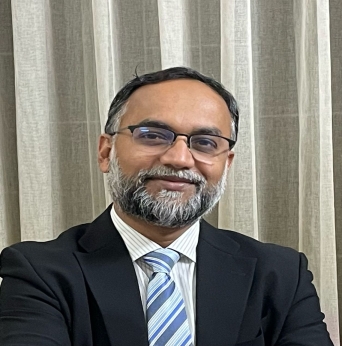
Professor
Department of Aquaculture
Prof. Dr. A. M. Shahabuddin is a distinguished aquaculture scientist and professor at the Faculty of Fisheries, Aquaculture & Marine Science, Sher-e-Bangla Agricultural University, Bangladesh. With a Ph.D. in Aquaculture from Mie University, Japan, and Postdoctoral research experience in advanced fish nutrition and aquaculture systems, he has made significant contributions to intensive aquaculture system design and development and marine science. His expertise includes tank-based indoor aquaculture systems, aquaculture feed formulation, fish and shellfish nutrition, climate change mitigation, and waste management. He has worked extensively on developing and optimizing Recirculating Aquaculture Systems (RAS), Biofloc Technology (BFT), and Integrated Mangrove Shrimp (IMS) farming, aiming to make aquaculture more efficient and environmentally sustainable. His professional journey spans over 17 years, with research and teaching experiences in Bangladesh, Japan, Thailand, and Mozambique. He has also served as a National Consultant for the Food and Agriculture Organization (FAO), contributing to fisheries development and seaweed farming in the coastal zone of Bangladesh.
Dr. Shahabuddin has received numerous awards, including the President Commendation Award from Mie University, Japan, and the Young Researcher Award in Oceanography & Marine Biology, Chintana Boonthamjinda Memorial Prize from Asian Institute of Technology (AIT), Thailand . He is working collaboratively with different international and national organizations and institutes. His research focuses on sustainable aquaculture practices through mechanization and intensification, digitalization of aquaculture facilities through IoT, alternative protein sources for aquaculture feed, and seaweed farming and value chain development. He has authored more than 30 peer-reviewed journal articles in high-impact scientific journals and contributed to several books on fisheries and marine science. Additionally, he has developed innovative technologies, such as energy-efficient RAS, BFT, IMS, and value-added ingredients from fish wastes, to enhance aquaculture productivity. His work continues to shape the future of sustainable aquaculture and fisheries, making significant contributions to both academic research and practical aquaculture advancements.
Mie University (2017)
Advanced research on plant physiology, growth, and environmental adaptation to improve sustainable agricultural practices.
Mie University (2016)
Advanced research on plant physiology, growth, and environmental adaptation to improve sustainable agricultural practices.
Asian Institute of Technology (AIT) (2006)
Advanced research on plant physiology, growth, and environmental adaptation to improve sustainable agricultural practices.
Bangladesh Agricultural University (BAU) (2004)
Advanced research on plant physiology, growth, and environmental adaptation to improve sustainable agricultural practices.
Bangladesh Agricultural University (BAU) (2000)
Advanced research on plant physiology, growth, and environmental adaptation to improve sustainable agricultural practices.
Dhaka City College, Dhaka (1995)
Advanced research on plant physiology, growth, and environmental adaptation to improve sustainable agricultural practices.
MDC Model Institute, Dhaka (1993)
Advanced research on plant physiology, growth, and environmental adaptation to improve sustainable agricultural practices.
| Title | Organization | Location | From | To |
|---|---|---|---|---|
| Senior Agriculture Sector Transformation Expert |
Food and Agricultural Organization of the United Nations (FAO)
|
Dhaka, Bangladesh | Sept/2024 | Dec/2024 |
| Research Assistant |
Support for University Fisheries Education and Research (SUFER) project/DFID, Bangladesh
|
Mymensingh, Bangladesh | June/2003 | 01 July, 2004 |
| National Specialist – Fisheries |
Food and Agricultural Organization of the United Nations (FAO)
|
Dhaka, Bangladesh | Jan/2021 | June/2024 |
| Research Fellow |
Norwegian Agency for Development Co-operation (NORAD) project, Bangladesh
|
Mymensingh, Bangladesh | Jan/2003 | March/2003 |
| Intern |
United Nations Development Program (UNDP)
|
Dhaka, Bangladesh | Aug/2006 | Feb/2007 |
| Professor |
Sher-e-Bangla Agricultural University (SAU)
|
Dhaka | 20 September, 2020 | Continued |
| Associate Professor |
Sher-e-Bangla Agricultural University (SAU)
|
Dhaka | 10 September, 2016 | 19 September, 2020 |
| Assistant Professor |
Sher-e-Bangla Agricultural University (SAU)
|
Dhaka | 12 November, 2010 | 09 September, 2016 |
| Lecturer |
Sher-e-Bangla Agricultural University (SAU)
|
Dhaka | 12 November, 2008 | 11 November, 2010 |
| Lecturer (Part-time) |
Sher-e-Bangla Agricultural University (SAU)
|
Dhaka | 07 March, 2007 | 11 November, 2008 |
| National Consultant -Seaweed |
Food and Agricultural Organization of the United Nations (FAO)
|
Dhaka, Bangladesh | 04/2019 | Dec/2020 |
| Sl | Journal Article | Year | Type | Link |
|---|---|---|---|---|
| 1 |
Shahabuddin, A.M., Al-Munim, S. M., Hossain, M. S., Anny, S.A., Hemal, S., Rifat, A.A.R., Sutrodhar, S. 2024. Feather Meal as a Sustainable Protein Source for Aquaculture in Bangladesh: Economic Implications. Journal of Aquatic Research and Sustainability, 1(1):21-28
|
2024 | Journal Article | Link |
| 2 |
Shahabuddin, A. M. Md. Abdul Hannan, Md. Foysul Hossain, Shahrear Hemal, Runi Khanom, Tahmina Afroz and Ahmed Mustafa. 2024. Evaluation of ethanolic extract of red seaweed (Gracelariopsis lamaneiformis) on growth and hematological parameters of Nile tilapia (Oreochromis niloticus). Aquaculture, Fish and Fisheries.
|
2024 | Journal Article | Link |
| 3 |
Mashequl, S. B., Muttakinul, M. I, Aktia, A., Marufa, M.K., Shahabuddin, A. M. 2024. Molecular identification, histopathology, and antibiotic susceptibility profiling of Aeromonas veronii strains isolated from Oreochromis niloticus in Bangladesh. Veterinary Medicine and Science, 10 (6): 1-12.
|
2024 | Journal Article | Link |
| 4 |
Md Mahmudul Kabir Peyal; Afrin Hossain Puspita; Sabrina Alam; Yousuf Mahbubul Islam; A. M. Shahabuddin; Mahady Hasan. 2023. A Sustainable Approach to Establish Industry-Academia Collaboration by Engaging the Rural Community for the Developing Countries. Australian Association of Engineering Education Conference. Griffith University, Gold Coast, Qld, Australia 114 p.
|
2023 | Journal Article | Link |
| 5 |
Abu Hena Mustafa Kamal, Ann Sinden, Mohd Hanafi Idris, Abdulla-Al-Asif, Hadi Hamli, Najiah Musa1, Rumeaida Mat Piah, Mohd Effendy Abd Wahid, Roslizawati Ab Lah, Nadiah Wan Rasdi, Muyassar H. Abualreesh, Md Khurshid Alam Bhuiyan & A.M. Shahabuddin. 2022. Diversity of Fisheries in Sarawak, Northwest Borneo: Present Status and Conservation Issues. Borneo Journal of Resource Science and Technology, 12(1): 32-51
|
2022 | Journal Article | Link |
| 6 |
Albert V. Manuel, A. M. Shahabuddin, Debasish Saha, Miguel H. Chele,
Kelvin O. A. da Conceicao, Naoaki Tsutsui and Takao Yoshimatsu. 2019. Growth and Feed Utilization of Juvenile Nile Tilapia Fed with Boiled Moringa oleifera Meal Diets: A Preliminary Report. Journal of International Cooperation Agricultural Development, 2019; 17: 8–13
|
2019 | Journal Article | Link |
| 7 |
Kim Wonkwon, Ekrem Ayna, AM Shahabuddin, Toshiyoshi Araki and Takao Yoshimatsu. 2019. Negative effects of full spectrum light exposure along with UV radiation on survival and reproduction of Cladocera Daphnia magna (Straus, 1820). International Journal of Fisheries and Aquatic Studies; 2019: 7(4): 40-44.
|
2019 | Journal Article | Link |
| 8 |
Ekrem Ayna, Kim Wonkwon, AM Shahabuddin, Toshiyoshi Araki and Takao Yoshimatsu. 2019. Effects of microbial fermented non-dairy creamer as an aquaculture feedstuff for Japanese red sea bream Pagrus major: A preliminary study. International Journal of Fisheries and Aquatic Studies; 7(4): 187-194
|
2019 | Journal Article | Link |
| 9 |
Thi Cam Tu Phan, Haruna Oka, A. M. Shahabuddin and Takao Yoshimatsu. 2017. Impact of salinity and turbidity changes on survival and growth of Sargassum fusiforme germlings. Aquaculture Science, 2017: 65(4) 331−338.
|
2017 | Journal Article | Link |
| 10 |
Debasish Saha, A. M. Shahabuddin, Takashi Mishima and Takao Yoshimatsu. Effects of different levels of vitamin E on lysozyme activity of Nile tilapia. Journal of Aquaculture Science, 2017: 10(4): 710-720.
|
2017 | Journal Article | Link |
| 11 |
A.M. Shahabuddin, Mohammad Nakib Dad Khan, Koji Mikami, Toshiyoshi Araki and Takao Yoshimatsu. 2017. Effects of red alga Pyropia spheroplasts diet on growth, feed utilization and body composition of Sea Cucumber, Apostichopus japonicus (Selenka). Aquaculture Research, 1-10
|
2017 | Journal Article | Link |
| 12 |
A.M. Shahabuddin, M.N.D. Khan, D. Saha, E. Ayna, K. Wonkwon, W.W. Murry, T. Yoshimatsu and T. Araki. 2015. Length-weight Relationship and Condition Factor of Juvenile Nile Tilapia Oreochromis niloticus (Linnaeus 1758) Fed Diets with Pyropia spheroplasts in Closed Recirculating System, Asian Fisheries Science, 28:117-129
|
2015 | Journal Article | Link |
| 13 |
A.M. Shahabuddin, M.N.D. Khan, N. Arisman, D. Saha, T. Araki, T. Yoshimatsu. 2015. Use of Pyropia spheroplasts as a live food substitute for culturing Japanese short-neck clam Ruditapes philippinarum, Aquaculture Science, 53: 195-197
|
2015 | Journal Article | Link |
| 14 |
M.R. Haque, M.S. Rahman, M.S. Islam, M.M. Ali, M.R. Islam and A.M. Shahabuddin. 2015. Production and Growth Performances of Carps in Different Stocking Densities of Polyculture. World Journal of Zoology, 10 (4): 247-251,
|
2015 | Journal Article | Link |
| 15 |
Moe Thidar Oo, A. M. Shahabuddin, Dhirendra P Thakur, Aye Aye Mon, Amararantne Yakupitiyage, Amrit N Bart, Ram C Bhujel and Jim S Diana, 2014. Optimization of phosphorus fertilizer in supplemental feed-fed based Nile tilapia (Oreochromis niloticus) ponds. Aquaculture Research, 46 (12): 2859–2870
|
2014 | Journal Article | Link |
| 16 |
A. Rico, T.M.Phu, K. Satapornvanit, J. Min, A.M. Shahabuddin, P.J.G. Henriksson, F. Murray, A. Dalsgaard, P.J. van den Brink, 2013. Use of veterinary medicines, feed additives and probiotics in four major seafood commodity-groups farmed in Asia: results of a field survey, Aquaculture, 412-413: 231-243.
|
2013 | Journal Article | Link |
| 17 |
S.A.A. Nahid, Patrik Henriksson, A.M. Shahabuddin, E. Karim, R. Ahmed, 2013. Freshwater prawn Macrobrachium rosenbergii post larvae (PL) collection from nature in Bangladesh. Nepalese Journal of Aquaculture and Fisheries, 1 (1): 150-164.
|
2013 | Journal Article | Link |
| 18 |
M.I. Hossain, A.M. Shahabuddin, M.A.B. Bhuyain, M.A. Mannan, M.N.D. Khan, R. Ahmed, 2013. Scaling up of stocking density of tiger shrimp (Penaeus monodon) under improved farming system in Khulna region of Bangladesh, American Journal of Experimental Agriculture 3(4): 839-848
|
2013 | Journal Article | Link |
| 19 |
M.M. Parvez, M.A.B. Bhuyain, A.M. Shahabuddin, A.R. Farque and A.S. Shine, 2013. Environmentally sustainable control measure of Argulus in freshwater ponds in Bangladesh, International Journal of Sustainable Agricultural Technology 9 (1): 64-70.
|
2013 | Journal Article | Link |
| 20 |
M.M. Parvez, M.A.B. Bhuyain, A.M. Shahabuddin, A.R. Farque and A.S. Shine, 2013. Environmentally sustainable control measure of Argulus in freshwater ponds in Bangladesh, International Journal of Sustainable Agricultural Technology 9 (1): 64-70.
|
2013 | Journal Article | Link |
| 21 |
Nahid S.A.A., E. Karim, M.R. Hasan, A.M. Shahabuddin, M.A.B. Bhuyasystems and comparative advantages of tilapia over other commercial aquaculture species in Bangladesh, Bangladesh Journal of Progressive Science and Technology 1(1): 089-092
|
2012 | Journal Article | Link |
| 22 |
Shahabuddin, A.M., Y. Yi, D.P. Thakur and J.S. Diana, 2012. Use of rice straw mat as substrate for aquaculture system. World Journal of Fish and Marine science, 4 (6): 577-585,
|
2012 | Journal Article | Link |
| 23 |
Manas, K.S., D. Utpol, R.J. Sultana, A.M. Shahabuddin, A.K.M. Mohiuddin, 2012. Livelihood analysis of dry fish producers and assessment of the use of harmful preservative in dry fish in the nazirertek region of Bangladesh, Journal of Science and Technology, 2 (1): 45-54
|
2012 | Journal Article | Link |
| 24 |
Rai, S, A.M. Shahabuddin, Y. Yi, M.A. Wahab, A.N. Bart and J.S. Diana, 2012. Effect of various loading rates of rice straw on physical, chemical and biological parameters of water, Journal of fisheries and Aquatic Science, 7(6): 364-378
|
2012 | Journal Article | Link |
| 25 |
Ahmed, R.; A.M. Shahabuddin, M.A.B. Habib, M.S. Yasmin, 2010 Socio-economic and environmental impact of aquaculture in the district Naogaon, Bangladesh. Research Journal of Fisheries and Hydrobiology, 5(2): 56-65
|
2010 | Journal Article | Link |
| 26 |
Shahabuddin, A.M.; M.A. Wahab, M.I. Miah Habib, K.A. and M.A. Salam. 2010. Abundance, distribution and culture potentials of three commercially important mollusks species along the coast of Bay of Bengal, Research Journal of Agriculture and Biological Science, 6(6):756-762
|
2010 | Journal Article | Link |
| 27 |
Ali, M. H., Rashid, M. H., Islam. S. R. Sarker, and A. M. Shahabuddin, 2008. Effect of stocking density on growth and production performance of tilapia (Oreochromis niloticus) in ponds, International Journal of Bioresearch, 4 (3), 33-38.
|
2008 | Journal Article | Link |
| 28 |
Ahamed, H, A. M. Shahabuddin, M. Z. F Ahmed, M. A. Wahab, and K.A. Habib, 2008. Polyculture of carps with small indigenous species (SIS) mola at Gazipur area of Bangladesh, Journal of Sher-e-Bangla Agricultural University, 2(1): 37-45.
|
2008 | Journal Article | Link |
| 29 |
Shahabuddin, A. M., K. A. Habib, M. A. Affan, M. R. Ahmed, M.S. Yasmin, 2007. Nutrition requirements of common carp (Cyprinus carpio) culture in Bangladesh, Bangladesh Journal of Progressive Science and Technology, 5(2): 417-420.
|
2007 | Journal Article | Link |
| 30 |
Wahab, M.A., A. M. Shahabuddin, M. A. Salam, and M. A. R. Hossain, 2004. Assessment of distribution, abundance and standing crops of green mussel (Perna viridis), clam (Meretrix meretrix) and oyster (Crassostrea spp.) and their harvest as a potential alternative livelihood option for coastal communities, Bangladesh journal of Fisheries (Special issue with Abstract and livelihood impact), 27: 35-36.
|
2004 | Journal Article | Link |
| Sl | Book | Year | Type | Link |
|---|---|---|---|---|
| 1 | Hannan, M. A., K. A. Habib, A. M. Sahabuddin, M. A. Haque, M. B. Munir. 2022. Post-Harvest Processing, Packaging and Inspection of Frozen Shrimp: A Practical Guide, Springer, Singapore
|
2022 | Book | Link |
| 2 | Ahmed, K. U. Shahabuddin, A. M. Ali, M. A. Bokhtiar, S. M., Salam, M. A., Alim, M. A., Bhuiyan, M. S. Mashuk, O. F., Rahman, M. M. 2021. Training on Seaweed culture, processing, marketing and field demonstration. Bangladesh Agricultural Research Council, Farmgate, Dhaka. pp 101
|
2021 | Book | Link |
| 3 | Ahmed, K. U. A. M. Shahabuddin, A. Akkas Ali, M. A. Alim. 2020. Seaweed cultivation, Farmers Training Manual. Bangladesh Agricultural Research Council, Farmgate, Dhaka, pp 49.
|
2020 | Book | Link |
| Sl | Others | Year | Type |
|---|---|---|---|
| 1 | Enzyme treated Nori (Pyropia yezoensis) as a new feed ingredient for aquatic animals in closed recirculating system, Graduate School of Bioresources, Mie University, Japan
|
2016 | Others |
| 2 | Use of Rice straw as a substrate for periphyton based aquaculture system. Aquaculture and Aquatic Resources Management, Asian Institute of Technology (AIT), Thailand
|
2006 | Others |
| 3 | Assessment of distribution, abundance and standing crops of green mussel, oyster and clam along the coast of Bay of Bengal. Bangladesh Agricultural University, Bangladesh
|
2004 | Others |
| Title | Source of Fund | Year | URL | Status |
|---|---|---|---|---|
|
Assessment of fish market waste as a protein source for the aquaculture operation and development of the environmentally friendly processing technology
|
MOST | 2019 | https://grant.most.gov.bd/en/services/most/special-research-grant | Completed |
|
Assessment of carbon sources for Biofloc technology for common fish species
|
SAURES | 2019 | https://sau.edu.bd/saures/overview | Completed |
|
Digitalization of Recirculating aquaculture System Laboratory through adopting IOT in Aquaculture
|
ICT Division | 2023 | http://ims.ictd.gov.bd/ | Completed |
|
Integrated Mangrove Shrimp (IMS) farming system in Bangladesh
|
Department of Fisheries | 2022 | https://projects.worldbank.org/en/projects-operations/project-detail/P161568 | Completed |
|
Development of locally engineered low-cost recirculating aquaculture system (RAS) in Bangladesh
|
Krishi Gobeshona Foundation (KGF) | 2020 | http://www.kgf.org.bd/index.php | Completed |
| Student | Degree | Year | Title | Role |
|---|---|---|---|---|
| Nakul chandra barman | Bachelor of Science | 2024 |
Consumer preference of nile tilapia (oreochromis niloticus) cultured in recirculating aquaculture system
|
Supervisor |
| MOHAMMAD IQBAL HOSSAN | Master of Science | 2022 |
Effects of dietary supplementation of Sargassum vulgare on growth and hematological parameters of ornamental Fish koi carp (Cyprinus rubrofuscus)
|
Supervisor |
| Dider Haider Nayeem | Master of Science | 2022 |
Assessment of Fecundity, Hatching & survival rate of Nile Tilapia (Oreochromis niloticus) applying feed with ginger and garlic extract
|
Supervisor |
| S. M. AL - MUNIM | Master of Science | 2021 |
Assessment of Poultry Feather Waste as a Feed Ingredient for Animal Feed and Its Business Opportunity: A Study on North Dhaka City
|
Supervisor |
| Md Syful Islam | Master of Science | 2019 |
Herbal extracts for growth and nutritional quality of juvenile freshwater prawn (Macrobrachium rosenbergii) under biofloc system
|
Co-Supervisor |
| Sl | Editorial Board | Type | From | To |
|---|---|---|---|---|
| 1 |
Journal of Aquatic Research and Sustainability
|
Editorial Board | 2023 | to date |
| Sl | Professional | Type | From | To |
|---|---|---|---|---|
| 1 |
Academic Council of Sher-e-Bangla Agricultural University
|
Professional | 2017 | to date |
| 2 |
Bangladesh Fisheries Research Forum (BFRF)
|
Professional | 2004 | to date |
| 3 |
Bangladesh Fisheries Society (BFS)
|
Professional | 2004 | to date |
| 4 |
Krishibid Institution of Bangladesh (KIB)
|
Professional | 2004 | to date |
| Sl | Achievements | Type | Year |
|---|---|---|---|
| 1 |
President Commendation Award, Mie University, Japan
|
Award | 2016 |
| 2 |
Young researcher award, Oceanography and Marine biology 2016, Australia
|
Award | 2016 |
| 3 |
Young researcher award, Mie University, Japan
|
Award | 2016 |
| 4 |
Conference grant award, Regional Forum on Climate Change (RFCC), Asian Institute of Technology (AIT), Thailand
|
Award | 2015 |
| 5 |
Monbukagakusho (MEXT) Scholarship, Japan
|
Scholarship | 2012 |
| 6 |
The Chintana Boonthamjinda Memorial Prize , Asian Institute of Technology (AIT), Thailand
|
Award | 2006 |
| 7 |
The Netherlands Government Scholarship, Asian Institute of Technology (AIT)
|
Scholarship | 2004 |
| 8 |
Nippon Foundation, Japan Scholarship
|
Scholarship | 2001 |
| Others | |
|---|---|
| 1 |
Workshop on Professional Profile Updating for SAU Faculty Members on SAU website, 30 January 2025, Sher-e-Bangla Agricultural university Dhaka, Bangladesh
|
| 2 |
Workshop of Bangladesh Fisheries Society. December 2023, Mymensingh
|
| 3 |
Organize joint Workshop on Fisheries and Aquaculture between the Bangladesh Fisheries Research Forum (BFRF), Bangladesh and Universiti Malaysia Sarawak (UNIMAS), Malaysia
|
| 4 |
Chairman, Department of Aquaculture, Faculty of Fisheries, Aquaculture and Marine Science, Sher-e-Bangla Agricultural University, Bangladesh
|
| 5 |
Dean, Faculty of Fisheries, Aquaculture and Marine Science, Sher-e-Bangla Agricultural University, Bangladesh
|

